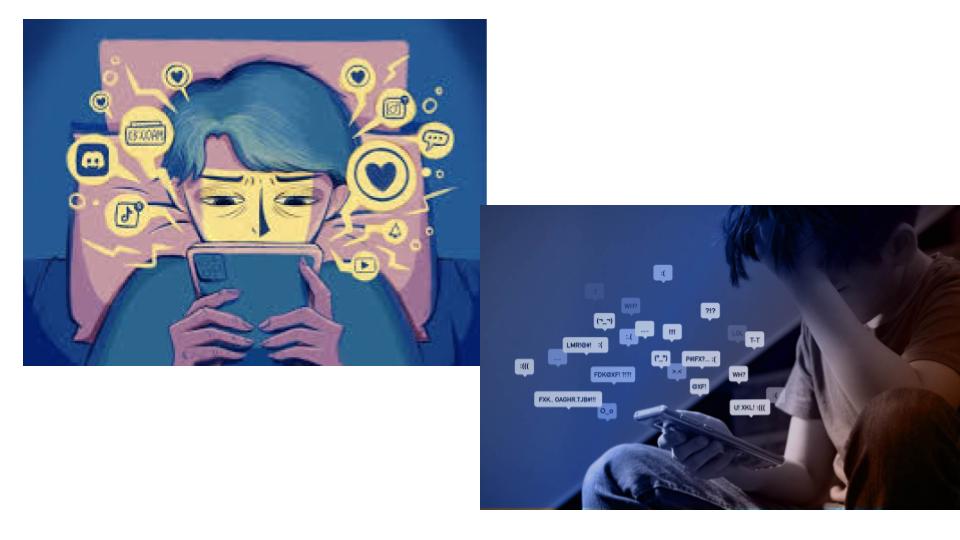
Social media shapes how teens can connect and express themselves. However, today’s youth are affected everyday on these online platforms, where it offers benefits as well as risks that can affect and impact their well-being.
“Today’s children and teens do not know a world without digital technology, but the digital world wasn’t built with children’s healthy mental development in mind,” said Sandy Chung, the MD, FAAP, and President of American Academy Pediatrics.
Social media offers many benefits for youth, like staying connected with friends, expressing creativity, and even keeping up to date with the world. Teens can use these platforms to share their ideas and find communities they feel accepted in.
Tochi Iroku-Malize, the MD, MPH, MBA, FAAFP, and President of American Academy of Family Physicians said, “Social media can be a powerful tool for connection.”
Interactions online can also promote healthy socialization among teens. Sending and receiving funny memes and videos you and your friends relate to can cheer up one’s mood. Talking on social media can help them take further steps into being more socialized and comfortable with interacting in person.
“Me and my friends have the same interests, so we send each other videos that we can relate to,” said Jennifer Marsh (EHS class of ‘29).
However, social media comes with a lot more negatives than positives. Things that are shown or being said on social media can cause someone to develop mental health issues. Cyberbullying, online racism, and threats are some examples.
“With near universal social media use by America’s young people, these apps and sites introduce profound risk and mental health harms in ways we are only now beginning to fully understand,” said Jack Resneck Jr., the M.D. President of the American Medical Association.
Spending too much time online can lead to stress, anxiety and even low self-esteem, especially when teens compare themselves to others. All-nighters on social media and looking at a screen can affect not only mental but physical health.
“Excessive screen time can have consequences for someone’s physical, mental, social and emotional health, as well as overall well-being,” said Danielle Grant, MD, a pediatrician and associate medical director at Texas Children’s Pediatrics.
Cyberbullying is a major concern. Hurtful messages and comments can flood your whole social media experience and have long lasting effects on your life. Cyberbullying can lead to depression and even suicidal thoughts and/or attempts.
“Cyberbullying can be especially harmful because it can happen at any time and reach a wide audience, making it harder for teens to escape,” said The American Academy of Pediatrics.
Dangerous content is also a major concern. Mis- and disinformation, racism and hate speech, and content that promotes dangerous behaviors can cause self-harm. When youth are exposed to unsafe behaviors online, such as substance use or self-harm, they may be at greater risk of engaging in similar behaviors themselves.
“Teens are especially vulnerable to online content because their brains are still developing decision-making skills,” said Dr. Michael Rich, pediatrician and director of the Center on Media and Child Health.
Overall, social media has both positive and negative effects on the youth. While teens can connect, make new friends, and express themselves, it can also cause problems like cyberbullying and mental health issues. Using social media safely and responsibly can help teens thrive to be safe and healthy while on social media.