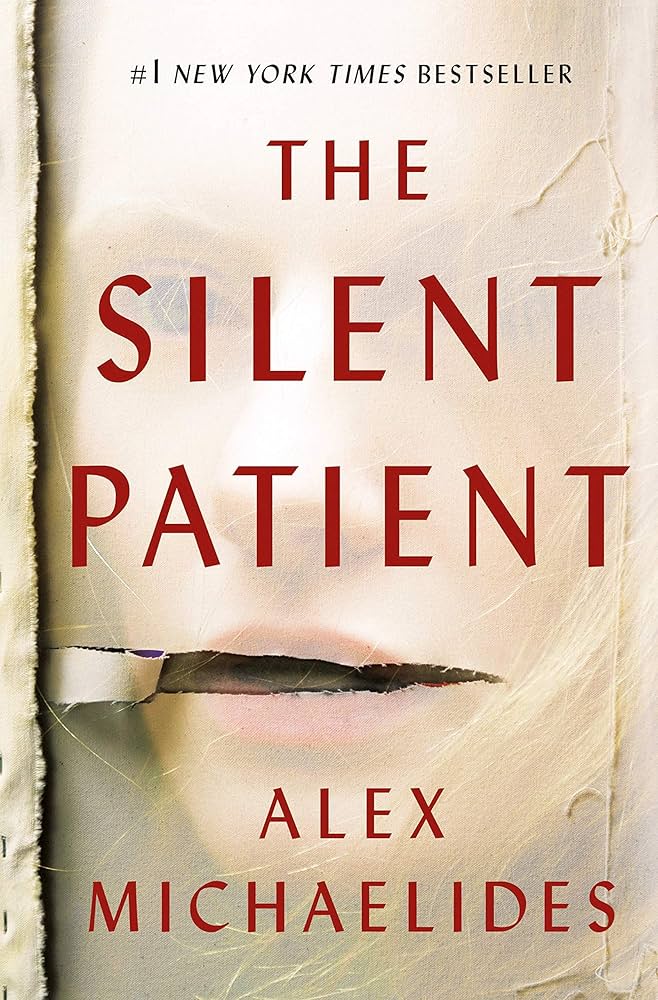
When given a short time to read a book, thrillers are fast moving and reeling. Alex Michaelides’s “The Silent Patient” (2019) was just that. A filled thriller with plot twists capturing the reader, pulling them into the story of Theo Faber and his patient Alicia Berenson.
The story begins with Alicia Berenson, a famous painter who murders her husband, Gabriel, then falling silent she becomes a media sensation and a patient at a secure psychiatric facility called The Grove where she meets Theo Faber.
Theo Faber, a psychotherapist, becomes obsessed with her case, taking a job at The Grove to untangle Alicia’s silence and uncover the mystery behind the murder. In doing so, he takes the role of a detective diving deep into her past and becoming engrossed with her life.
His investigation blurs the lines between a professional interest and a personal obsession, leading jaw dropping revelations about Alicia and himself. While Alex Michaelides’s “The Silent Patient” is a reeling and beautifully written story, it fails to provide full closure on the events throughout the book. It leaves the reader wanting more.
“I felt desperately sad…forever a child, trapped. I felt lost, hopeless, close to tears”
This quote, like many others scattered throughout the book, demonstrates Michaliades’ well developed understanding of childhood trauma and how it affects people in the future. Both Alicia and Theo experience some sort of childhood trauma but Michaelides gives two different outcomes from traumatic experiences, in this case focusing on childhood trauma.
Alicia’s trauma is still present in her body however more inactive and haunts her where her only outlet is her paintings. On the other hand, Theo is actively running from his trauma and he’s unable to escape his past. He confuses overcoming his trauma with running away from his shadows. Theo and Alicia’s experiences show two different outcomes of childhood trauma, both very common.
These trauma’s have well shaped who Theo and Alicia are presently and show how they aren’t only what their roles are in the book. Alicia’s flashbacks to her childhood and past give us insight into Alicia’s mental state throughout her life leading up to the murder of her husband.
Michaelides’s construction of “The Silent Patient” is mixed with plot twists, complex characters and flashbacks. This pulls you in deep, allowing you to embed yourself in the story, becoming a detective right alongside Theo. As you are engrossed with his story, Michaelides’s choice of words, dramatic irony, and use of an unreliable narrator allows for him to be in charge of what you learn next.
Yes, the development and construction of characters are thought through and complex, but the development of the story cuts off dramatically at the end, which leaves much to the interpretation for the reader. Especially with plot twists throughout a story, I enjoy having all plots tied up in the end which didn’t happen. To me, this feels like a rushed or lazy writing style and feels similar to when a child leaves an activity half finished.
Despite what I interpret as a rushed ending, I still truly enjoyed “The Silent Patient” and think fans of thrillers–especially those who enjoy fast moving, reeling books should check this novel out. The novel is being adapted into a film by production company Plan B (Brad Pitt’s company) and will likely be out in 2026- so definitely read it before you see it!