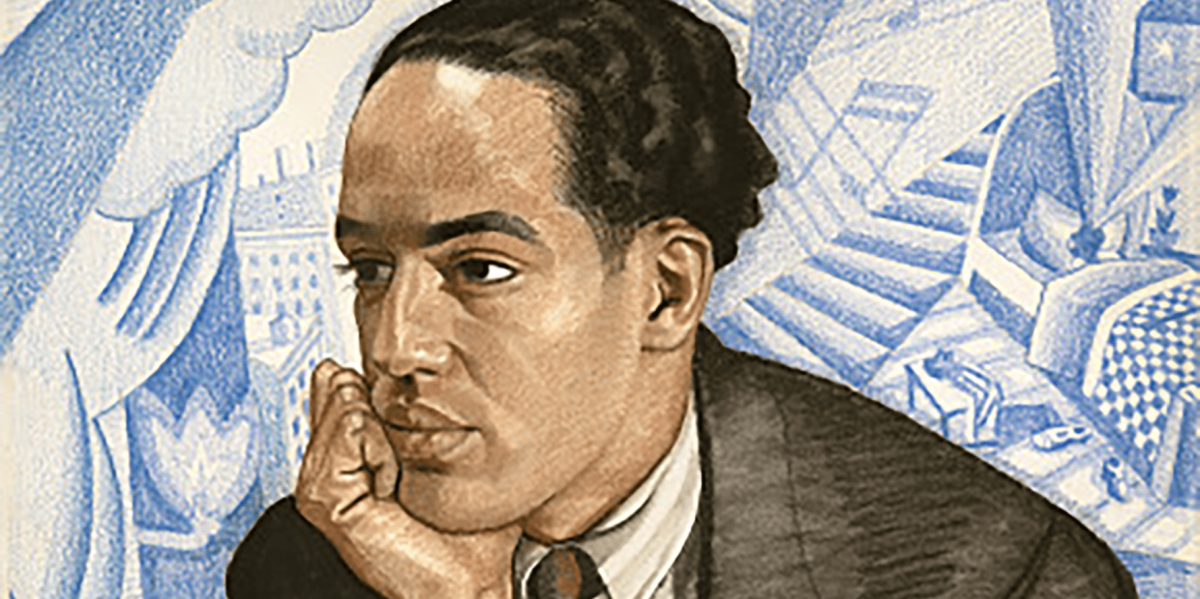
Langston Hughes, poet, playwright, during the Harlem Renaissance wrote a poem called “The Weary Blues” to show readers what life is like for African Americans[a]. The poem is about a musician singing about his life and how sad it is. Hughes uses a lot of literary devices to portray the overall message and tone of his poem.
Hughes’ writing style has managed to stand the test of time with his intuitive writing style and use of literary devices. In “The Weary Blues” he uses Onomatopoe1a to show how important the use of the word is, He also uses Imagery to paint a picture in the reader’s head on how the musician’s situation is.
“Ain’t got nobody in all this world, Ain’t got nobody but ma self. I’s gwine to quit ma frownin’ And put ma troubles on the shelf.” – “The Weary Blues.”
Hughes likes to repeat words to make the reader understand how important the word i[b]s as well as he was trying to replicate the style of jazz music during the time. He also does this to set the tone and mood of the poem making the reader engaged in it.
“Down on Lenox Avenue the other night by the pale dull pallor of an old gas light” – “The Weary Blues”.
Hughes’ writing style tends to use a lot of imagery to set the setting of the poem. This helps the reader understand the message and the vibe of the poem.
“Thump, thump, thump, went his foot on the floor. He played a few chords then he sang some more—”
The use of onomatopoeia that Hughes likes to use in his poem immerses the reading into the poem and adds some realism. This allows the reader to connect [c]to it on a deeper level.
Langston Hughes’ writing style is very unique and timeless. His use of literary language really helps send the overall message to what he wants the reader to obtain. If you want to read more about Langston Hughes and his poems visit Mrs. Davila in the media center or visit Poets.org to learn more!
[a]capitalize
[b]it is also following the style of jazz music–which he was trying to replicate in poetic form
[c]also, because it is mimicking a musical style it allows us to feel the poem as well